
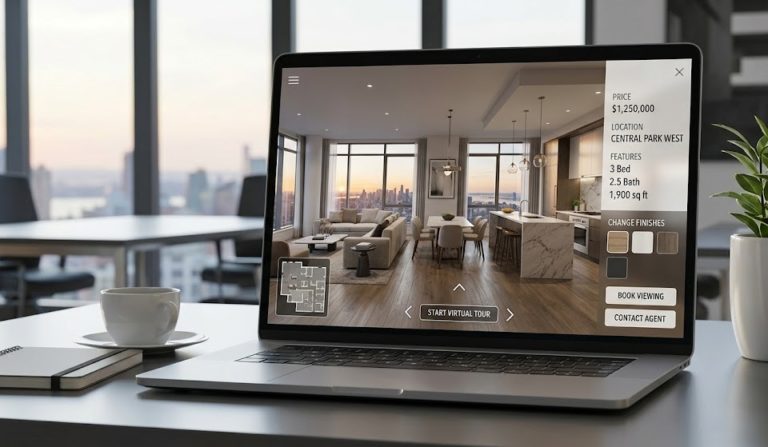
The real estate market is evolving rapidly, and buyers are becoming increasingly demanding when it comes to how properties are presented. A few years ago, a set of renderings, floor plans, and a brochure was often enough to generate interest in a new development. Today, however, customers expect a much richer experience that helps them understand a project before making one of the most important financial decisions of their lives.
Developers who adapt to these expectations gain a significant advantage. Modern digital presentation tools allow them to showcase projects more effectively, build trust with buyers, and create a more engaging customer journey from the very first interaction.
Property buyers want more information than ever before
Purchasing a home or investment property involves careful consideration. Buyers want to compare locations, understand layouts, evaluate amenities, and visualize how the finished development will fit their lifestyle. Traditional marketing materials often struggle to answer all of these questions in a clear and intuitive way.
This challenge becomes even greater when properties are sold before construction is completed. In such cases, buyers must rely almost entirely on the quality of the presentation provided by the developer. The more realistic and informative that presentation is, the easier it becomes to build confidence and support purchasing decisions.
The limitations of traditional property marketing
Static images and floor plans remain important elements of property marketing, but they have limitations. Buyers frequently need additional explanations to understand apartment orientation, building placement, views, distances between amenities, or the overall character of a development.
Sales representatives often spend considerable time answering questions that arise simply because traditional materials cannot fully communicate the scale and complexity of a project. This can slow down the sales process and create uncertainty among prospective buyers.
As developments become larger and more sophisticated, the need for more advanced presentation methods continues to grow.
Digital experiences are becoming the new standard
Consumers are accustomed to interactive experiences in nearly every aspect of their lives. Whether shopping online, booking travel, or researching products, they expect information to be accessible, engaging, and easy to explore.
The real estate sector is increasingly following the same direction. Interactive property presentations allow buyers to explore developments in a more natural way, helping them gain a better understanding of the investment long before visiting a sales office.
This approach not only improves user engagement but also supports transparency, which is particularly important when selling properties off-plan.
Building trust through visualization
Trust plays a critical role in every property transaction. Buyers need confidence that the finished project will meet their expectations and reflect the promises made during the sales process.
Modern visualization technologies help developers communicate their vision more clearly. By presenting realistic representations of buildings, apartments, surroundings, and amenities, they reduce ambiguity and make it easier for customers to evaluate a project objectively.
The result is a stronger relationship between developers and buyers, supported by a presentation that is both informative and visually compelling.
Supporting sales teams with better tools
Sales offices are increasingly adopting digital technologies that simplify property presentations and improve communication with clients. Instead of relying solely on printed materials, teams can use interactive environments that showcase available units, building layouts, and project features in a much more dynamic manner.
This allows conversations to focus on buyer needs and preferences rather than basic explanations. Customers arrive better informed, while sales representatives can spend more time guiding them toward the most suitable property options.
The future of property sales is immersive
As competition within the real estate market intensifies, developers are searching for new ways to differentiate their projects and attract qualified buyers. Interactive and photorealistic presentations are becoming an important part of this strategy, helping investments stand out in an increasingly crowded marketplace.
Developers looking to learn more about advanced digital property presentation solutions and modern visualization technologies can explore the possibilities available at https://vinode.io/.
The companies that embrace these innovations today are likely to be better positioned for the expectations of tomorrow’s property buyers. By creating more engaging, transparent, and informative customer experiences, they can strengthen both marketing performance and long-term sales success.